GUTTERS
Perimeter gutters collect water from roof edges and must be sized, supported and sloped so they can move runoff toward outlets.
Ameristar Roofing evaluates commercial roof drainage as part of the roofing system, from low-slope roof surfaces and drain transitions to gutters, scuppers, downspouts and the final path water takes away from the building.
Commercial roofs depend on controlled drainage. When gutters, scuppers, drains or roof slopes do not move water efficiently, the roof can experience ponding, overflow and additional stress around seams, flashings and penetrations.
Commercial gutters and roof drainage are not accessories bolted onto the end of a roofing project. On low-slope and large roof areas, drainage is one of the core performance conditions that determines how long water remains on the roof and where it goes after it leaves.
Ameristar Roofing evaluates visible drainage paths, gutters, downspouts, scuppers and internal drains where present, along with the roof areas feeding them. The goal is to identify restrictions, damaged components, poor transitions and conditions that may be concentrating water where the roof is most vulnerable.
Drainage work may be a standalone repair, part of a larger roof-repair scope or integrated into commercial roof replacement. The right answer depends on whether the problem is the drainage component itself, the roof geometry feeding it, or both.
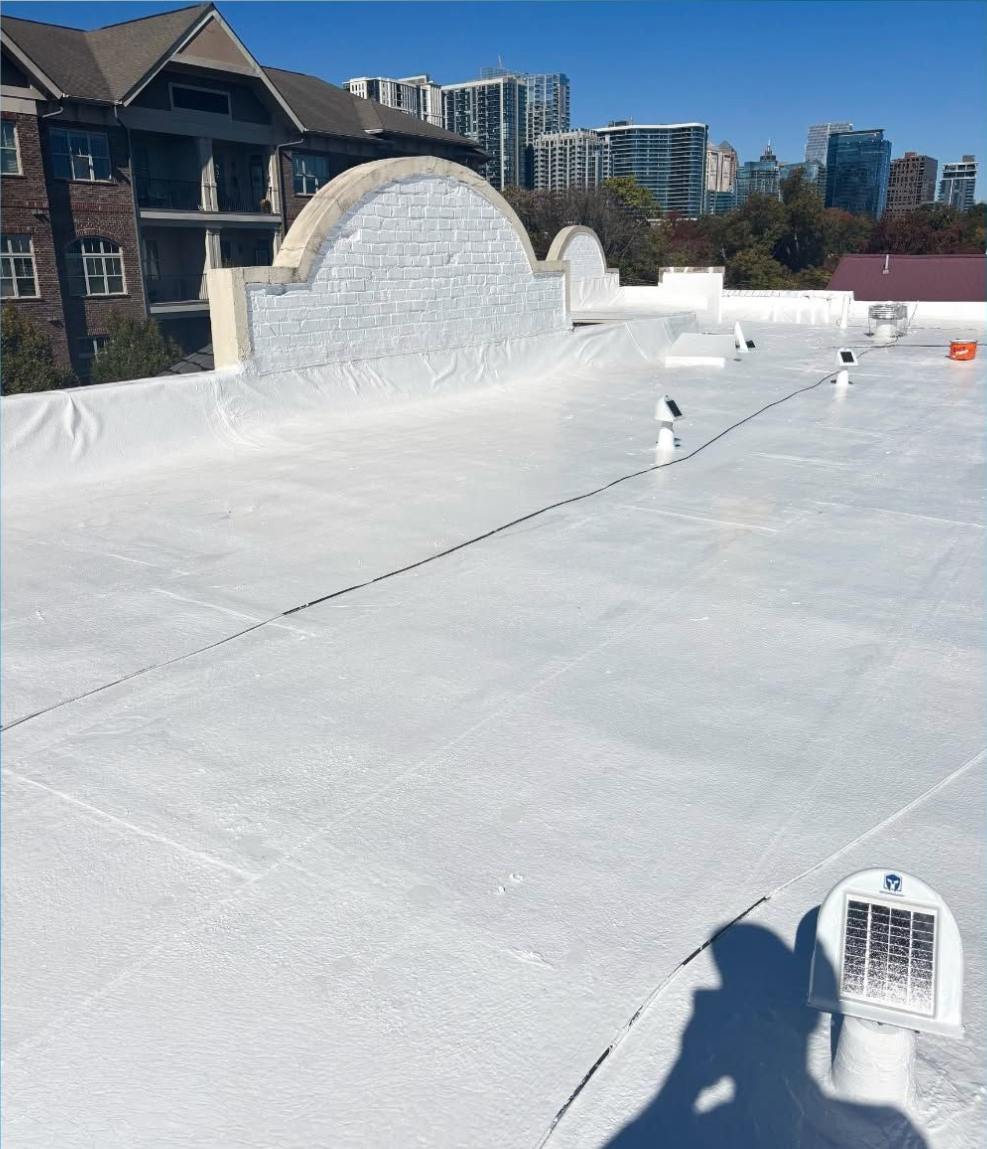
Perimeter gutters collect water from roof edges and must be sized, supported and sloped so they can move runoff toward outlets.
Downspouts carry collected water away from the roof and building edge. Restrictions, damaged sections or poor discharge locations can defeat the gutter above them.
Through-wall and edge scuppers provide drainage paths on many low-slope roofs and depend on clean openings and watertight transition details.
Interior roof drains and their surrounding sumps must remain open and correctly integrated with the roofing membrane or built-up assembly.
Leaves, debris and sediment can reduce capacity and cause water to remain on the roof longer than intended.
Overflow, separation, corrosion or poor slope can discharge water where the building envelope is not designed to handle it.
The drainage opening may work while the transition around it leaks, especially when membrane or metal details have deteriorated.
Low areas, restricted drains or inadequate slope can hold water and increase stress on membranes, seams and flashings.
Water dumped at foundations, entrances or walkways creates a different building problem even when the roof itself is draining.
Edge metal, membrane terminations and gutter interfaces must work together or water can bypass the intended drainage path.

Commercial roof repair and replacement create the best opportunity to correct drainage details that are already contributing to wear or leaks.
Review ponding, overflow, staining, failed components and reported leak locations.
Follow the intended water path across the roof and through gutters, scuppers, drains and downspouts.
Separate component failure, restriction, flashing failure and roof-geometry issues.
Define which drainage and roofing components need repair, replacement or coordination.
Perform the approved work with attention to watertight roof-to-drainage transitions.
Keep outlets and drainage paths clear and recheck vulnerable areas as part of routine roof maintenance.
Ameristar Roofing can evaluate visible commercial drainage conditions and build the repair or replacement scope around the complete water path.
(770) 831-1770