RECURRING LEAKS
Leaks appearing in multiple areas can signal that the roof has moved beyond a single isolated repair problem.
Ameristar Roofing develops commercial roof replacement scopes around the existing assembly, drainage, insulation, rooftop equipment and building operations before selecting the new system.
Replacement becomes the stronger long-term option when failures are widespread, moisture or system deterioration is no longer localized, repair spending is accelerating, or the existing assembly no longer supports the building’s performance and lifecycle goals.
Commercial roof replacement is not simply a larger version of residential re-roofing. Existing membranes, insulation, deck type, moisture, rooftop equipment, drainage, penetrations, edge conditions and building operations all affect what can reasonably be installed.
Ameristar Roofing evaluates the visible roof conditions and project constraints before developing the replacement scope. The objective is to understand why the existing roof is failing, whether any sections can remain, what tear-off is required and which new assembly fits the building.
That up-front work is what separates a defensible commercial re-roofing plan from “remove old roof, install new roof,” the construction equivalent of writing “do better” on a work order.
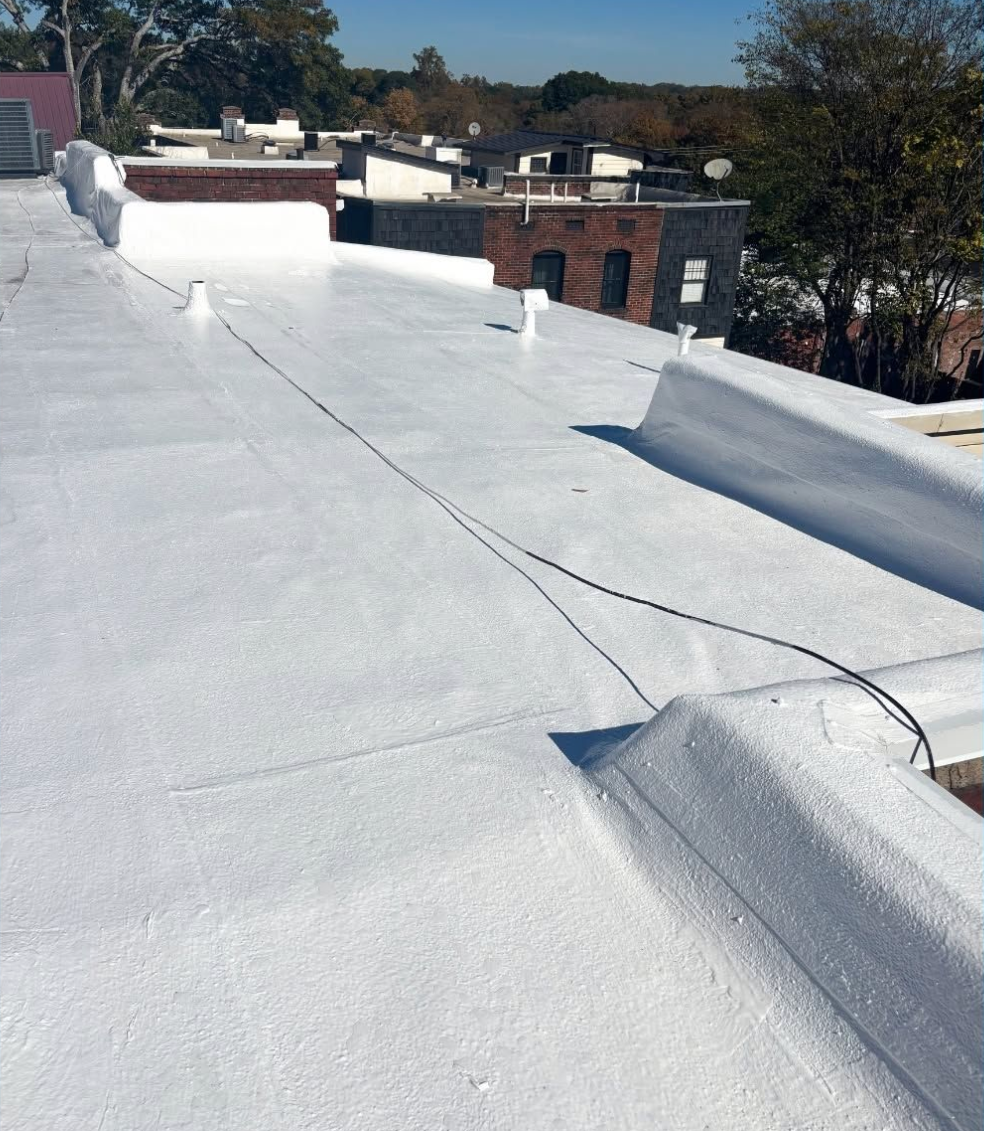
Leaks appearing in multiple areas can signal that the roof has moved beyond a single isolated repair problem.
Broad cracking, splitting, seam issues, corrosion or aging can make localized repair less reliable over time.
Moisture within insulation or the roof assembly can change the replacement scope and may limit overlay options.
Chronic ponding or poorly functioning drains, scuppers and gutters can accelerate deterioration and should be addressed in the new design.
A roof covered in patches may still be serviceable, but the pattern can show that maintenance spending is no longer buying enough useful life.
Renovations, equipment changes, energy goals or a new ownership strategy can justify moving to a different roof assembly.
 01
01
Multi-ply asphalt and reinforcing layers used on low-slope commercial roofs where redundancy and proven performance matter.
EXPLORE BUILT-UP ROOFING →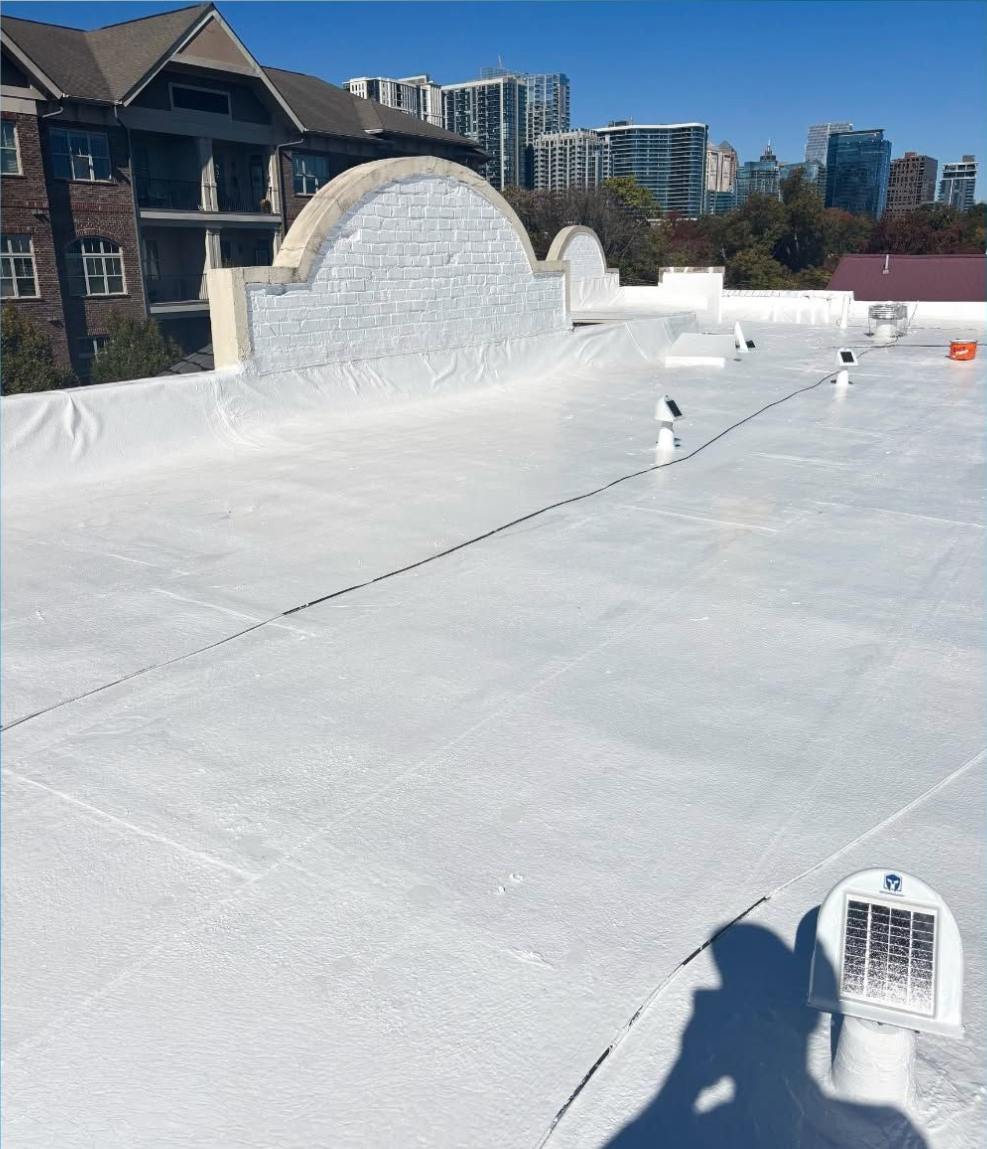 02
02
Asphalt-based sheets modified for added flexibility and strength, commonly used on low-slope roofs and detail-heavy areas.
EXPLORE MODIFIED BITUMEN ROOFING → 03
03
Reflective thermoplastic single-ply membrane with heat-welded seams for commercial low-slope roof assemblies.
EXPLORE TPO ROOFING → 04
04
Heat-welded thermoplastic membrane valued for chemical resistance and durable seam construction on qualifying facilities.
EXPLORE PVC ROOFING → 05
Flexible synthetic rubber membrane with a long commercial roofing history and strong weathering characteristics.
EXPLORE EPDM ROOFING → 06
06
Standing seam and other commercial metal systems for buildings that need durability, long-term performance and architectural impact.
EXPLORE METAL ROOFING →Existing materials are removed as required by the approved scope so deck and substrate conditions can be addressed.
Insulation type, thickness, attachment and existing conditions are considered as part of the new roof assembly.
Drains, scuppers, gutters and water paths are reviewed so the replacement does not preserve an avoidable drainage problem.
Curbs, pipes, walls, edges and equipment transitions require deliberate details because these areas routinely determine roof performance.
The membrane, built-up, modified bitumen or metal system is selected around slope, building use, lifecycle and project conditions.
Final review, cleanup and applicable manufacturer or project documentation should be part of the completed replacement.
Replacement planning should account for what is happening below and around the roof. That means understanding entrances, deliveries, tenant activity, equipment, parking and sensitive interior operations.
Review the existing roof, problem areas, drainage and visible project constraints.
Build the replacement scope around tear-off, insulation, system type and details.
Coordinate staging, access, deliveries, operations and weather strategy.
Protect the property and establish the work sequence before removal begins.
Complete the approved roof assembly with attention to drainage and detail work.
Finish cleanup, final review and applicable documentation.
Start with the existing assembly. Ameristar Roofing can evaluate visible roof conditions, drainage and project constraints before building the commercial replacement scope.
(770) 831-1770